Options That Change Your Price
Every bathroom is slightly different, so these are the choices that move the final figure up or down. We confirm each one with you before quoting.
Tiling method
Laying new tiles over the existing ones costs less than a full removal and replacement, but it is only suitable where the substrate is sound.
Floor waterproofing
Whether the floor needs a new waterproofing membrane applied, which is essential if the existing one has failed.
Bathtub removal
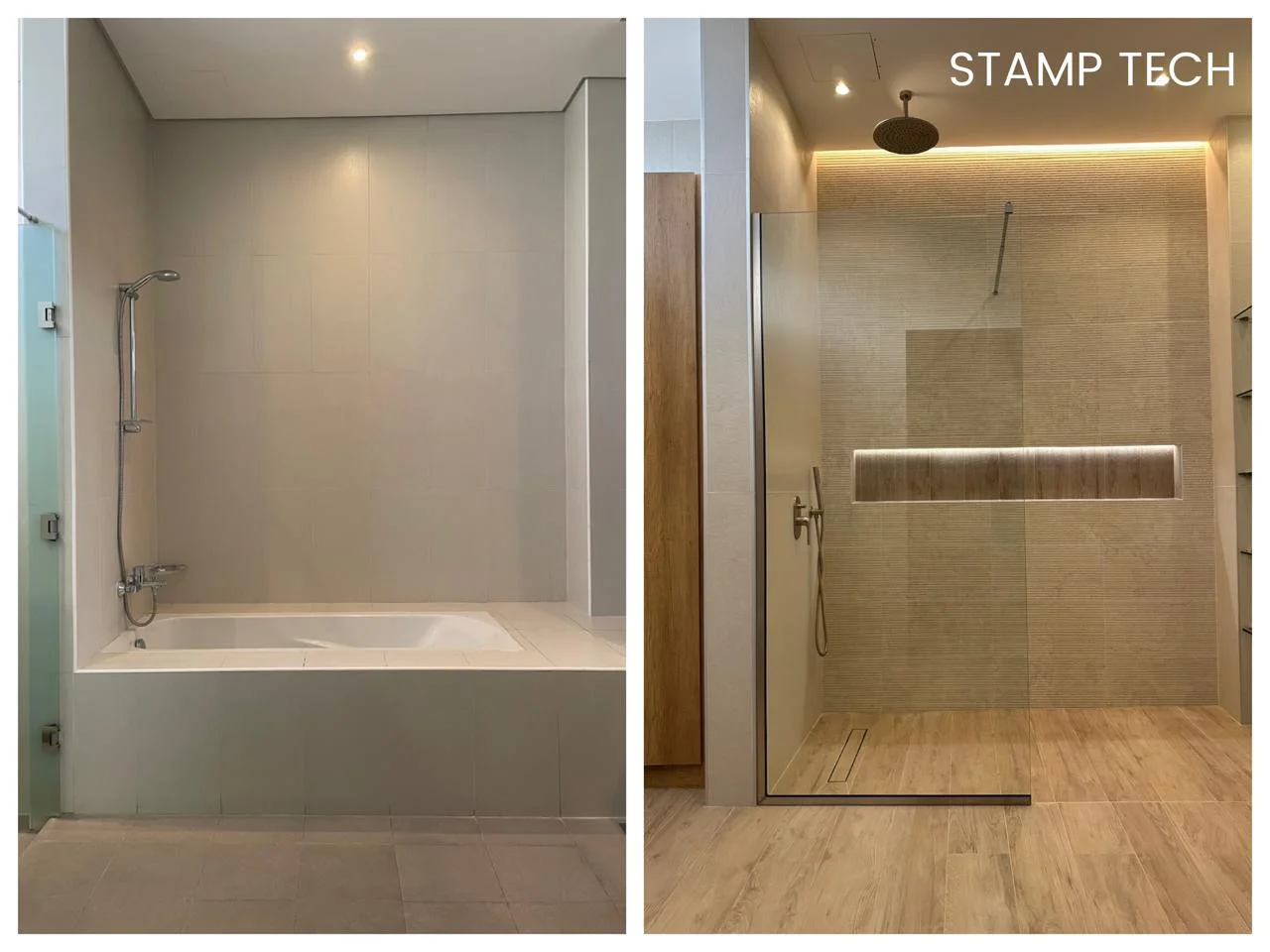
Taking out the bathtub and converting the space into a walk-in shower.
Glass partition type
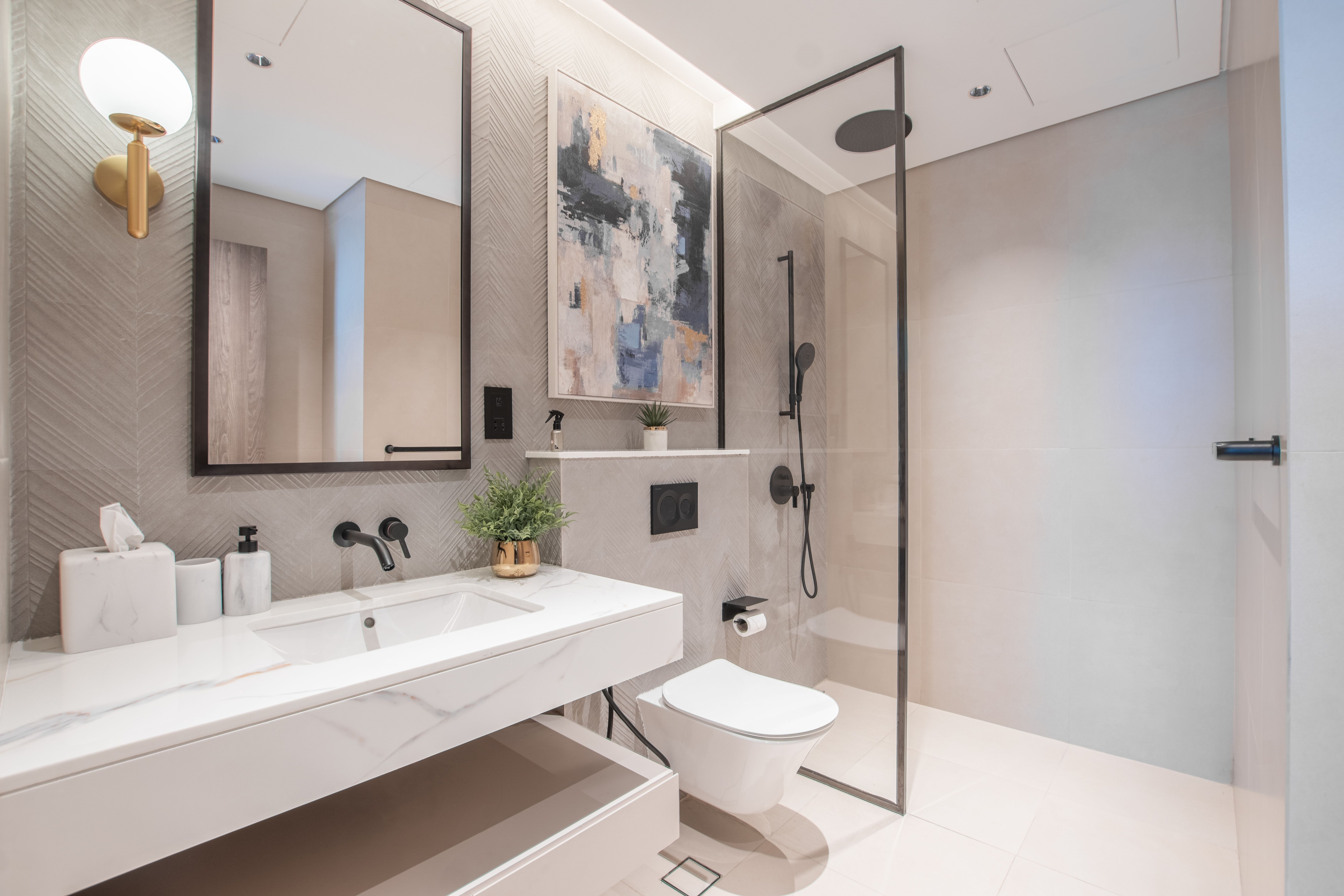
Frameless panel, a panel with a door, or no glass at all. Frameless costs the most and looks the cleanest.
Ceiling and niche work
Replacing the false ceiling, and adding a recessed shower niche for storage.
Fixture replacement
Whether the W/C, washbasin or bathtub are being replaced or kept.
Sending us photos or a drawing of your bathroom with your enquiry gets you a far more accurate quote, and usually a faster one.
What Affects the Cost
- Bathroom size. More floor and wall area means more tiles, more waterproofing and more labour.
- Scope of work. A cosmetic refresh sits at one end, a full strip-out to the blockwork at the other.
- Material quality. The single biggest variable, and entirely within your control.
- Plumbing modifications. Moving the W/C, basin or shower means new drainage routing and adds real cost.
- Waterproofing requirements. Non-negotiable, and more extensive where the existing membrane has failed.
- Labour and workmanship. Skilled tiling and MEP work costs more and is worth paying for.
- Community approvals. NOCs, deposits and restricted working hours all affect the programme and the price.
Materials With the Biggest Impact
If you want to control the budget, these are the items to focus on, because they account for most of the variation between a modest bathroom and an expensive one:
- Large-format porcelain or natural stone tiles
- Sanitaryware: toilets, basins and bathtubs
- Custom vanity units
- Quartz, marble or solid surface countertops
- Frameless glass enclosures
- Premium taps, mixers, rain showers and concealed fittings
- Waterproofing products and tile adhesives
- Mirrors, lighting and accessories
Labour or Materials: Where Does the Money Go?
Materials typically take the largest share of the total, especially once premium finishes are involved. Labour is the smaller number, but it is the one that decides whether the bathroom lasts.
The work worth paying properly for is demolition, plumbing, electrical, waterproofing, tiling, carpentry, painting and ceiling installation. Saving money on the tiles is a choice you can live with. Saving money on waterproofing is a leak you will pay for twice.
How Long a Bathroom Renovation Takes
A standard bathroom runs 7 to 14 working days on site. Larger or more complex projects take 2 to 4 weeks.
- Days 1-2: Demolition. Strip out the existing fixtures, tiles and ceiling.
- Days 2-4: Plumbing and electrical. First-fix modifications and any relocation work.
- Days 4-6: Waterproofing and curing. Membrane applied and left to cure properly before anything covers it.
- Days 6-9: Tiling. Wall and floor tiles, adhesive and grouting.
- Days 9-11: Installation. Sanitaryware, vanity, mixers and accessories fitted.
- Days 11-14: Finishing. Final finishes, testing, silicone and a full clean before handover.
What stretches a programme: waiting on NOC approvals, restricted working hours in your building, material delivery lead times and inspection requirements.
Permits and NOC Approvals
Whether you need a No Objection Certificate depends on your developer, your community rules and how much you are changing. Apartments almost always need one; villas vary.
The process can involve contractor registration, submitting renovation drawings, paying a security deposit, obtaining approval from community or property management, and demonstrating compliance with building guidelines. We prepare and handle this paperwork as part of the job.
How to Reduce Cost Without Compromising Quality
Where to save
- Keep the existing plumbing layout wherever possible
- Choose durable mid-range ceramic or porcelain tiles
- Fit a modern ready-made vanity unit rather than bespoke joinery
- Upgrade taps, mixers, mirrors and accessories instead of everything
- Switch lighting to energy-efficient LEDs
- Repaint ceilings and moisture-resistant surfaces rather than replacing them
- Reuse fixtures that are still in good condition
Where never to cut
- Waterproofing
- Plumbing
- Electrical installation
- The quality of the workmanship behind the tiles
Upgrade or Complete Renovation?
An upgrade is enough when
The plumbing, waterproofing and layout are all sound and you mainly want the bathroom to look better. Cosmetic work of this kind usually lands between AED 8,000 and AED 20,000.
A full renovation is the right call when
There is water leakage, damaged waterproofing, ageing plumbing, poor use of the space or an outdated electrical setup. Covering these up costs more in the long run than fixing them now.
Ready to start your bathroom project?
Send us photos or a drawing of your bathroom and we will come back with an itemised quote, a clear scope and a realistic timeline. No obligation, no hidden costs.
FAQ
What is the average bathroom renovation cost in Dubai?
Most bathroom renovations fall between AED 8,000 and AED 35,000. The final figure depends on the size of the bathroom, the scope of the work and the materials you choose.
What factors affect bathroom renovation costs?
Bathroom size, scope of work, material quality, plumbing modifications, waterproofing requirements, labour and workmanship, and community approvals.
What is a reasonable budget for a bathroom remodel?
Budget-friendly work sits at AED 8,000-15,000, mid-range at AED 15,000-30,000, premium at AED 30,000-50,000+, and luxury custom projects above AED 50,000.
How much does a small bathroom renovation cost?
Usually AED 8,000 to AED 20,000. Keeping the existing plumbing layout is the single most effective way to keep a small bathroom at the lower end of that range.
How much does a bathroom makeover cost?
A makeover with no structural changes typically costs AED 8,000 to AED 20,000, covering finishes, fixtures and cosmetic improvements.
Do layout changes increase the cost?
Yes, significantly. Moving the W/C, basin or shower means new drainage and plumbing routing, which adds both labour and time to the project.
Which materials have the biggest impact on cost?
Tiles, sanitaryware, vanity units, countertops and glass enclosures create the largest swing in the total, followed by taps, mixers and lighting.
Is more of the cost labour or materials?
Materials usually account for the larger share, particularly with premium finishes. Labour is the smaller cost but determines the quality and lifespan of the work.
What is the typical renovation timeline?
Standard bathrooms take 7 to 14 working days. Larger or more complex projects run 2 to 4 weeks, depending on approvals and material deliveries.
Do I need permits or NOC approvals?
An NOC is often required for apartments and gated communities. Requirements vary by developer and by the scope of work. We handle the drawings and paperwork.
Do community rules affect the timeline and cost?
Yes. Permitted working hours, waste disposal rules, security deposits and contractor registration all influence how long the job takes and what it costs.
What is the cheapest way to renovate a bathroom?
Keep the existing plumbing layout, choose good mid-range materials and use professional workmanship. Cutting corners on the hidden work is what makes a cheap bathroom expensive later.
How can I reduce costs without compromising quality?
Finalise the design before work begins, choose durable materials over decorative ones, and compare itemised quotes from contractors rather than headline prices.
Is an affordable renovation with good quality realistic?
Yes, with careful planning and sensible allocation of the budget. Spend on waterproofing, plumbing and workmanship, and be selective about where premium finishes actually show.
Should I upgrade or do a complete renovation?
Upgrade if the issues are cosmetic and the plumbing, waterproofing and layout are sound. Choose a full renovation if there is leakage, failed waterproofing, ageing plumbing or an unworkable layout.
When should I request quotes?
Early, while you are still planning and before you buy any materials. It helps you set a realistic budget and avoid purchasing items that do not suit the final design.